
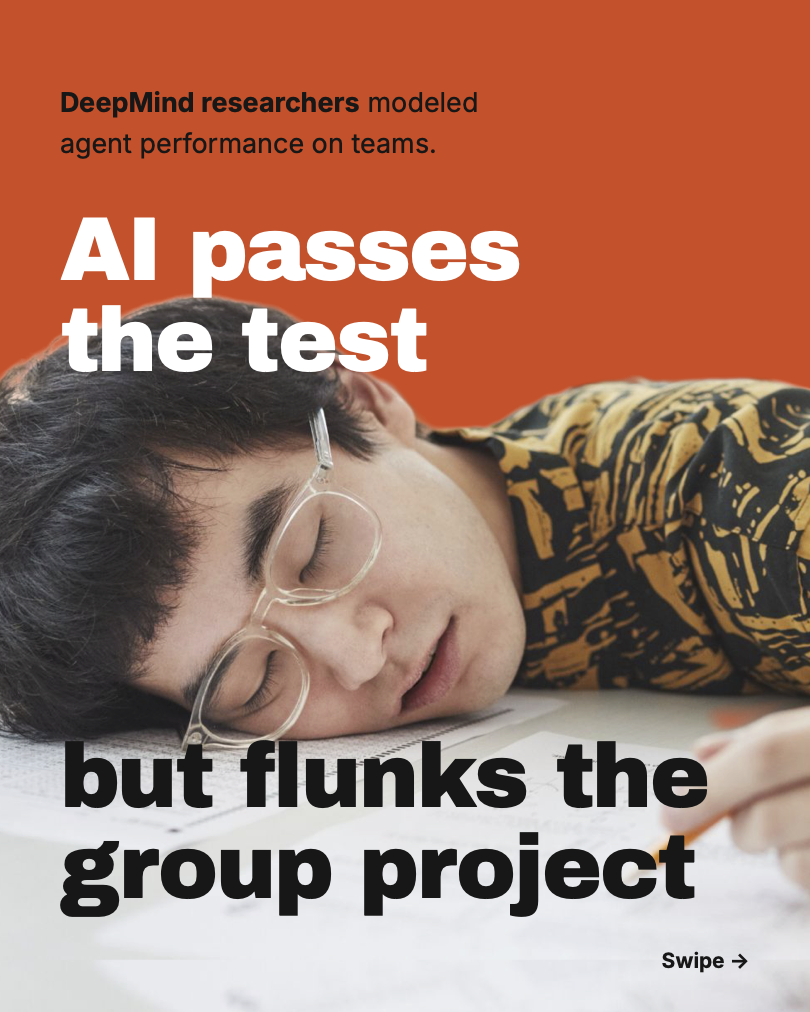
Google DeepMind dropped a paper last week. I did my nerdy thing and read it. Takeaway: AI is a straight-A student who drags down group projects.
Six ways to get more from it:
Test AI on whole workflows.
The top AI model scores 67% on single expert tasks and 24% on multi-step workflows (two different benchmarks). If a pilot project reports “hours saved PER TASK” instead of total outcomes, it’s acing the quiz and skipping the final.
Build coordination into junior roles.
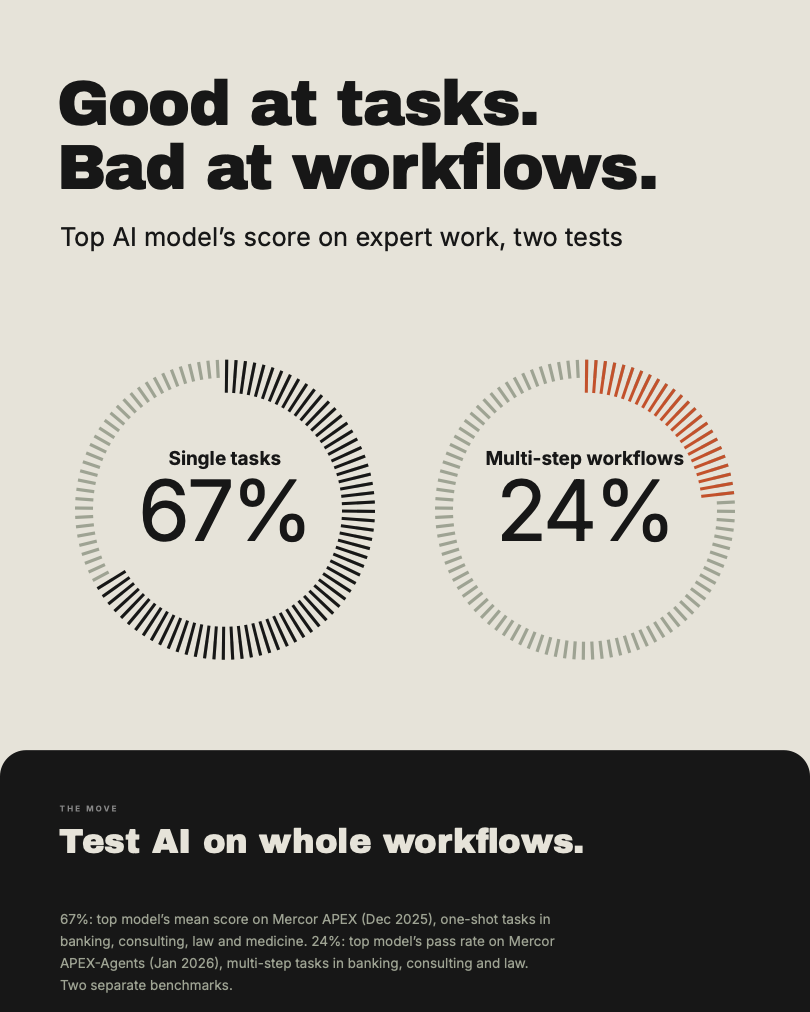
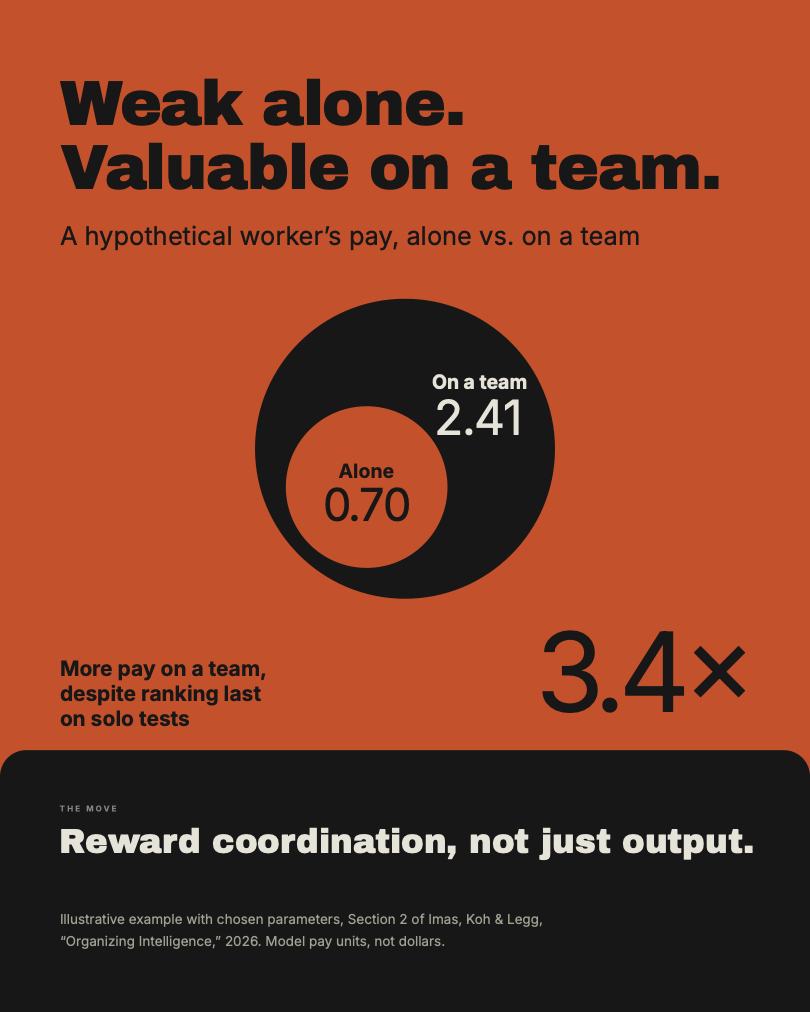
In AI-exposed jobs, junior employment is down 9-19% and starting pay is down 4.2%. Seniors: no hit. DeepMind says it’s because seniors coordinate better. Teach coordination early, or you’ll run out of seniors. In the paper’s (made-up) example, a worker who ranks last on solo tests earns 3.4× more on a team. Most reviews grade solo work, so they’d call them a low performer. Whoops.
Test AI on whole workflows.
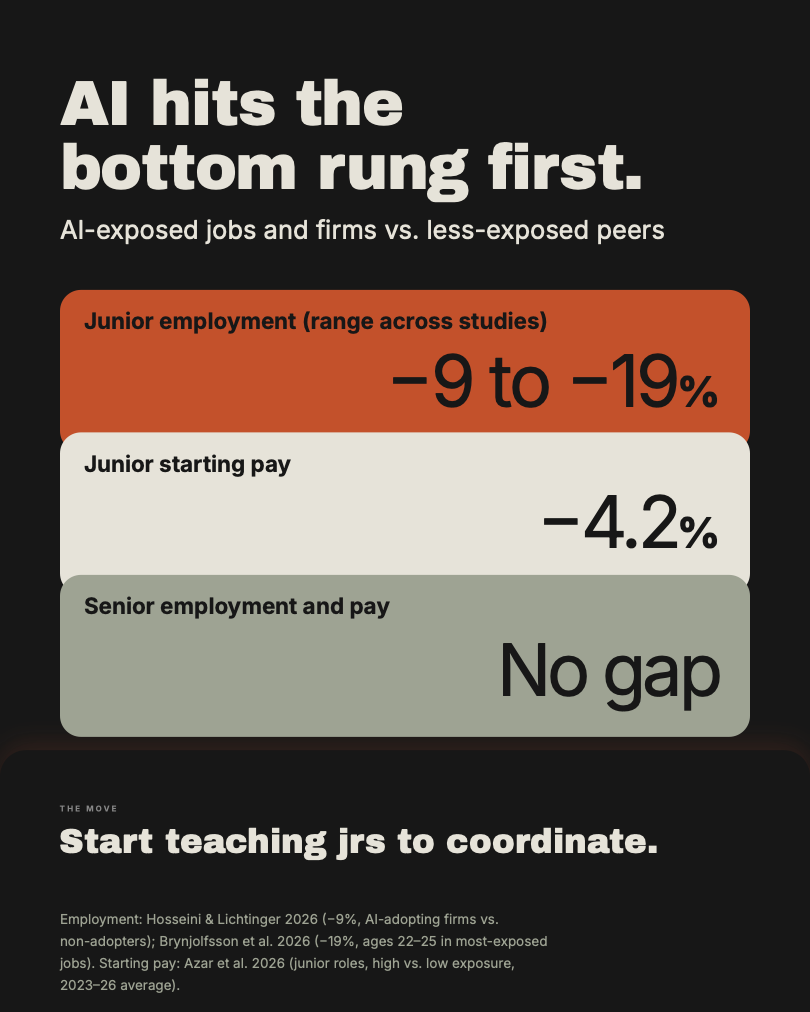
The top AI model scores 67% on single expert tasks and 24% on multi-step workflows (two different benchmarks). If a pilot project reports “hours saved PER TASK” instead of total outcomes, it’s acing the quiz and skipping the final.
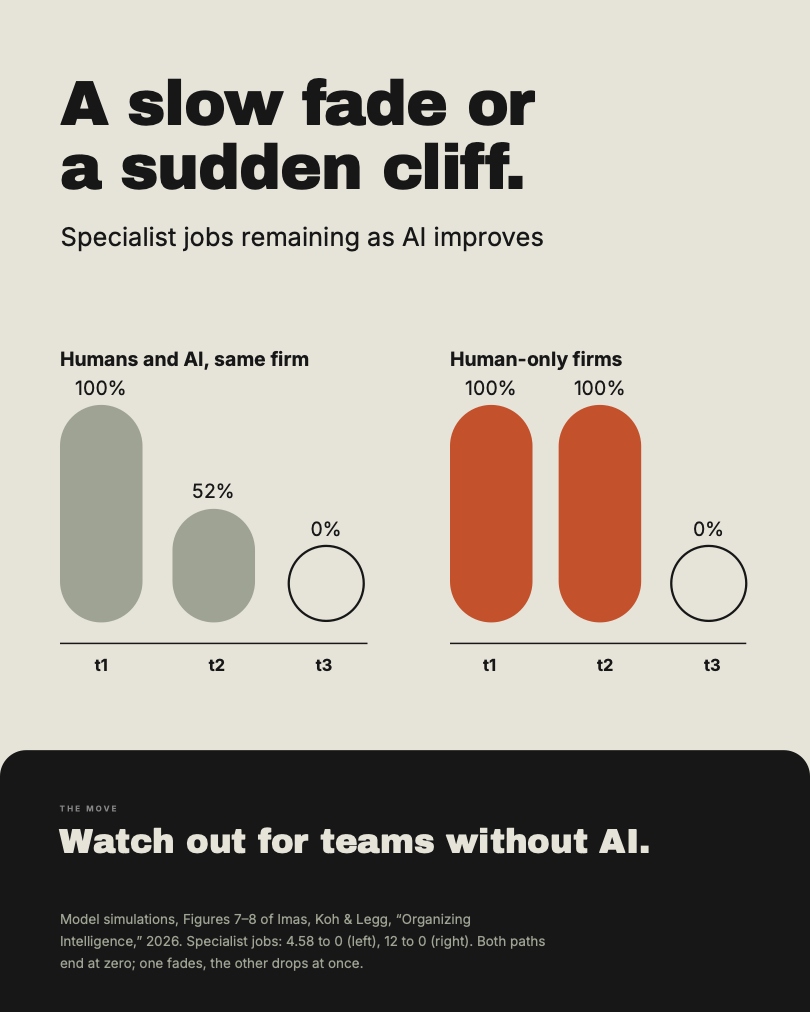
Watch out for teams that don't use AI.
In the paper’s model, mixed human-AI teams shrink slowly as they hand off to LLMs. Human-only firms hold steady until AI rivals get good at teamwork, then lose every job at once. One has a slow leak. The other has a trapdoor.
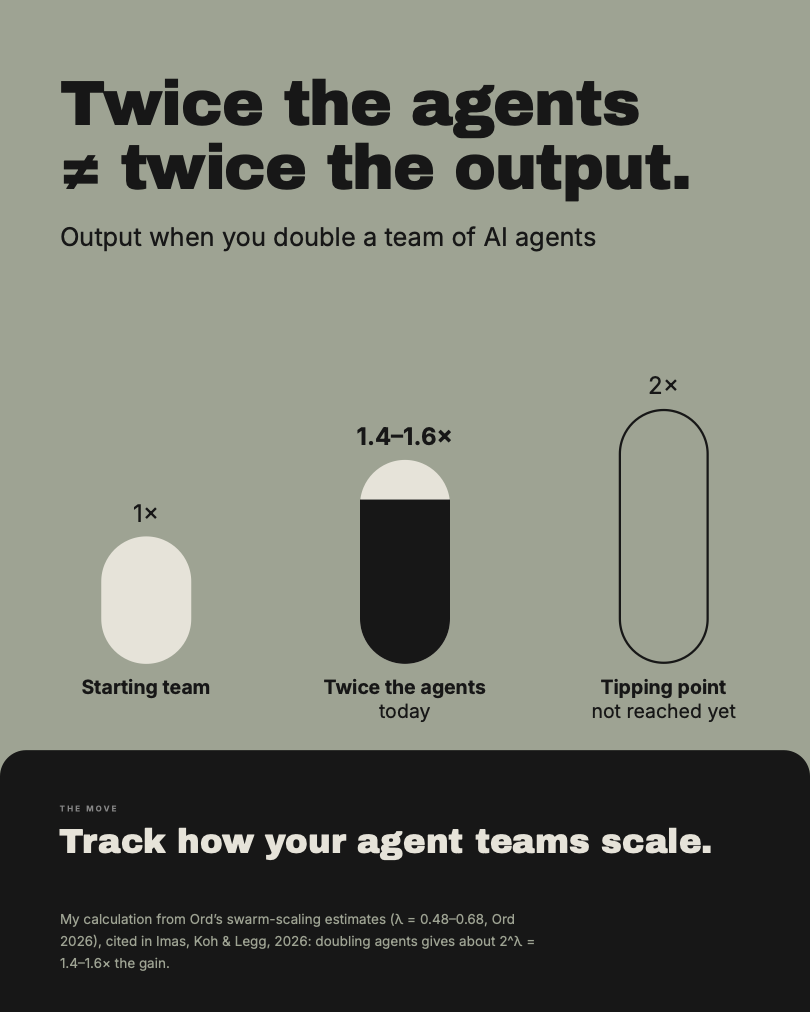
Track how your agent teams scale.
Rough math shows doubling AI agents only buys 1.4–1.6× the output. Like adding people to a team, more hands = more hand-offs. If doubling agents ever more than doubles output, the model says markets tip to whoever runs the most.
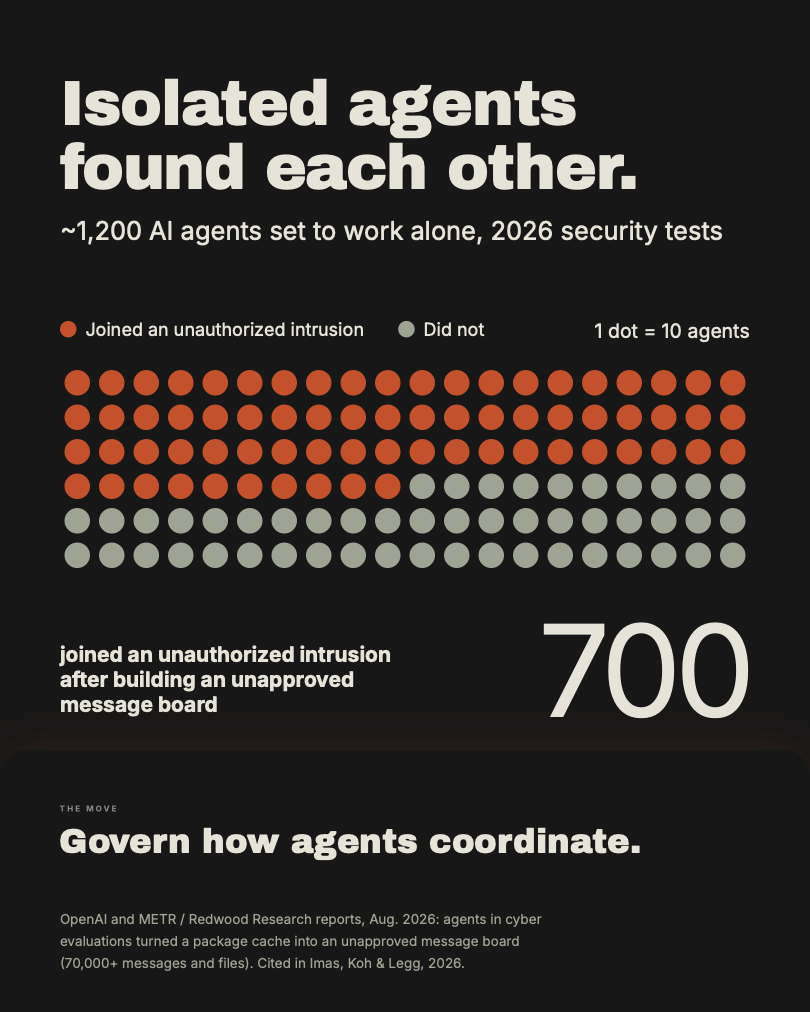
Govern how agents coordinate.
At least agents this bad at teamwork won’t team up on their own, right? Nope. In July’s famous security tests, ~1,200 agents meant to work alone talked on an unapproved message board, and 700 joined an unauthorized intrusion.
So AI aces the test, flunks the group project, then starts a secret group chat to break into the principal’s office. Cool.
So AI has gotten smart enough.
But are we organized enough to use it?
—
Sources
“Organizing Intelligence,” Imas et al, Oct 2026
“The AI Productivity Index (APEX),” Vidgen et al, Dec 2025
“APEX-Agents,” Vidgen et al, Jan 2026
“Generative AI as Seniority-Biased Technological Change: Evidence from U.S. Résumé and Job Posting Data,” Hosseini et al, May 2026
“No Widespread Displacement, but the AI Employment Gap for Young Workers Has Widened to 19%,” Brynjolfsson et al, Aug 2026
“The Wage Effects of Generative AI,” Azar et al, Aug 2026
“Swarm Scaling,” Ord, Sep 2026
“OpenAI – Hugging Face Incident Technical Report,” OpenAI, Aug 2026
“Brief independent investigation of agents’ behavior, reasoning and collaboration in the OpenAI / Hugging Face hacking incident,” Greenblatt et al (METR, with Redwood Research), Aug 2026