
Learn once, brag forever
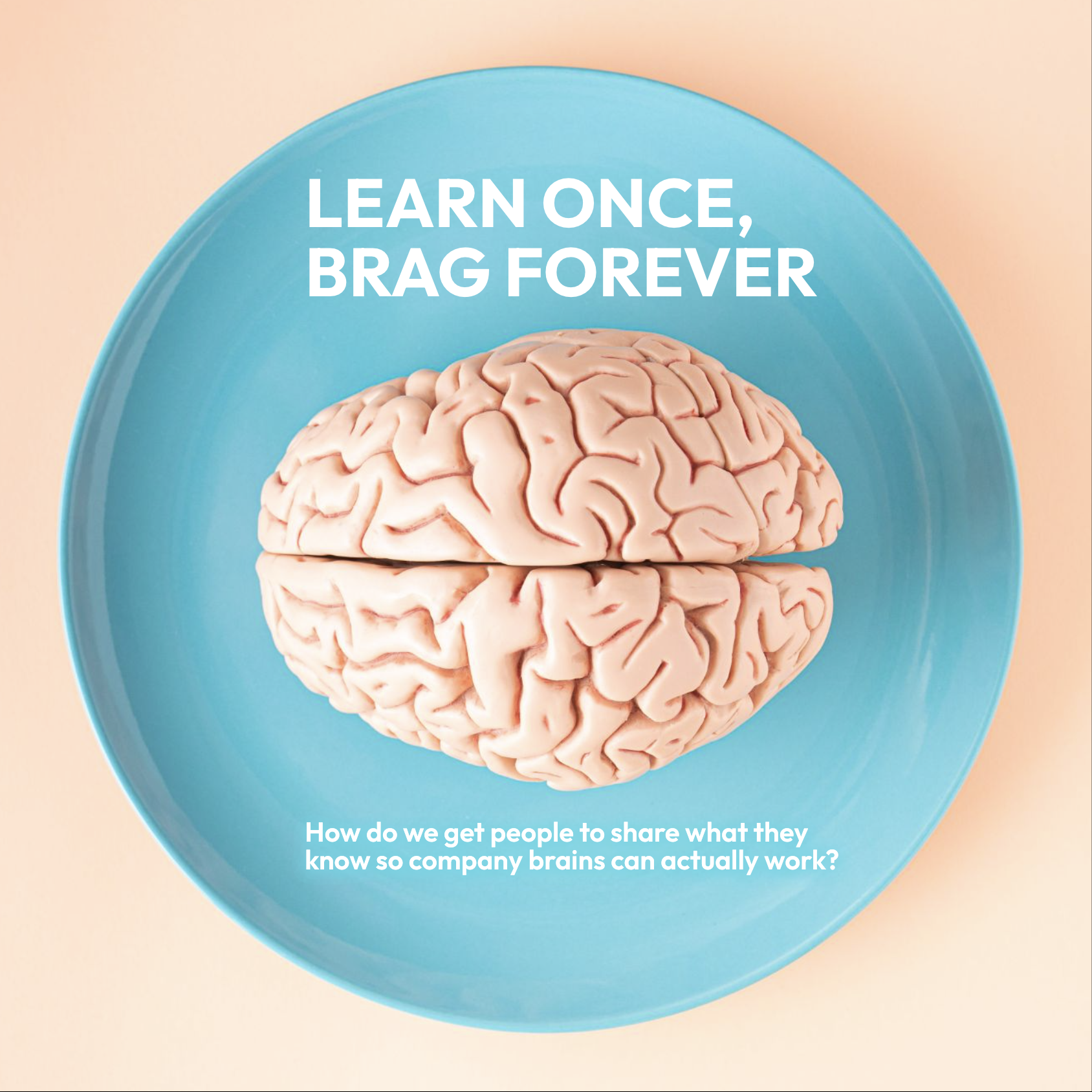
Ramp sells software that stops companies from wasting money.
One week in May, Ramp spent $1.5 million on AI tokens.
Yeah. But they fixed it. And they fixed it in a way I’ve seen a few companies swirling around: They built a shared AI workspace called Glass that’s meant to remember everything the company figures out. The motto is “We learn things once.”
That’s a cool motto.
And a cool product if it works.
Most of the companies I’ve seen trying to build a Company Brain end up with something more like a family recipe box. The good ones hold cards in four handwritings, with notes in the margins. “Less salt. —Dad.” The bad ones hold one card: “Jell-O salad, 1987.”
Most of us already own that box.
It’s called SharePoint.
And, yeah, Glass has the cards too: prompts and agents Ramp’s power users built. But its real bet is called Margins. It reads Slack, Notion, old chat sessions, and what people teach it directly. Someone in Finance taught it that a U.S. company with a U.K. office isn’t a U.K. customer. That stays burned in memory. By Ramp’s count, 323 people have made 6,500+ edits to what Glass knows.
That’s a lot of “less salt.”
But: How do we get people to actually write in the margins?
Catherine Connelly and her colleagues asked workers why they hide what they know. Three answers: no time to explain it, someone stole the credit last time, and the person asking never helped them.
A shared brain quietly handles two. Teaching happens mid-task, so there’s no time tax. And nobody’s doing a favors for layabouts. They’re telling the company, once. Molly Wasko and Samer Faraj saw this in a lawyers’ online forum: People shared to build a reputation, with no expectation of payback.
Which leaves credit. Maybe the best feature in the launch is the CEO bragging about an account manager’s prompt like it’s a report card on the fridge.
Glass gives Dad a pen.
And a chance to brag about his notes.
—
Sources:
“Introducing Glass: Learn Things Once.” Eric Glyman. Oct 2026
“Ramp Cracked Enterprise AI. Here’s The Playbook.” Simon Taylor. Apr 2026
“Knowledge Hiding in Organizations.” Connelly et al, Jan 2012
“Why Should I Share? Examining Social Capital and Knowledge Contribution in Electronic Networks of Practice.” McLure Wasko and Faraj, Mar 2005