
History’s worst traffic jam was caused by poor planning.
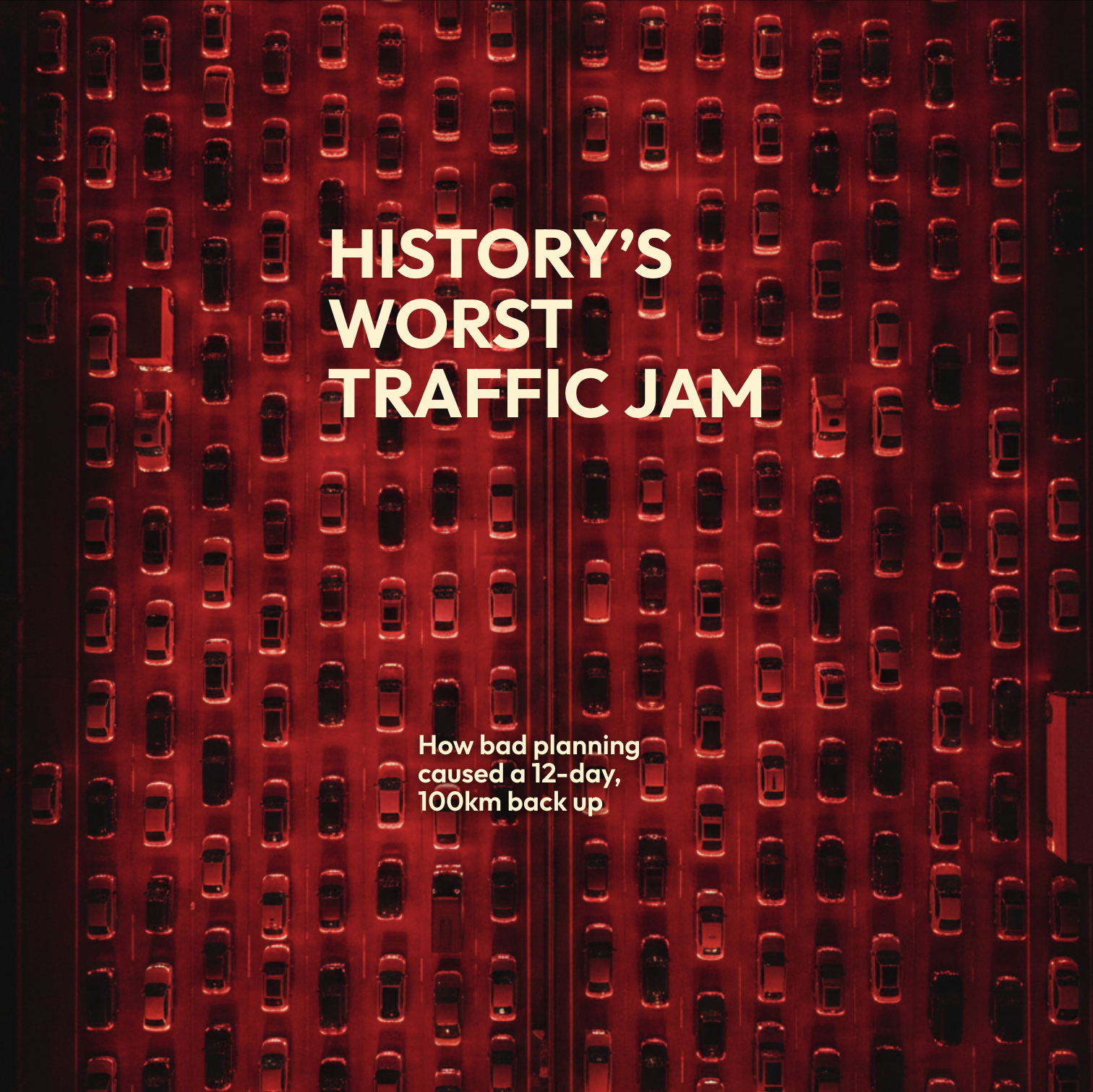
Companies spend millions on transformation roadmaps. Almost no one thinks through what happens to the org during the transformation. In 2010, China learned this the hard way—and it created the history's worst traffic jam.
Three things happened at once on Highway 110:
Coal production in Inner Mongolia spiked 21% — from 602M to 730M tons.
The rail line that carried most of the coal was being overhauled.
The local government started maintenance on the only alternate route—cutting capacity 50%
Before construction started, traffic was already 60% over the road's design capacity.
The result?
100 kilometers of frozen cars.
12 days of crawling 1km per day.
Locals sold bottled water at 15x the normal price.
Not one of the decisions was wrong in isolation:
More coal production? Smart.
Rail upgrades? Overdue.
Road maintenance? Necessary.
But nobody asked: "what happens when we do all three at the same time?"
I see this constantly with AI rollouts. Companies redesigning processes, retraining teams, and deploying new tools — simultaneously — on an org that was already running at 110% capacity.
The sequencing is the strategy. Not the roadmap. Not the tech stack. The order you do things, and what you protect while you're doing them. Before you break something to rebuild it, make sure traffic has somewhere to go.
I help leadership teams sequence this stuff so the org doesn't gridlock.
If this sounds like your Monday, let's talk.