
Insights
Writing and research and stuff
Science says you might secretly suck at giving gifts
Science says you're terrible at giving gifts.
Researchers have spent decades studying gift-giving. The findings flip everything you think you know…
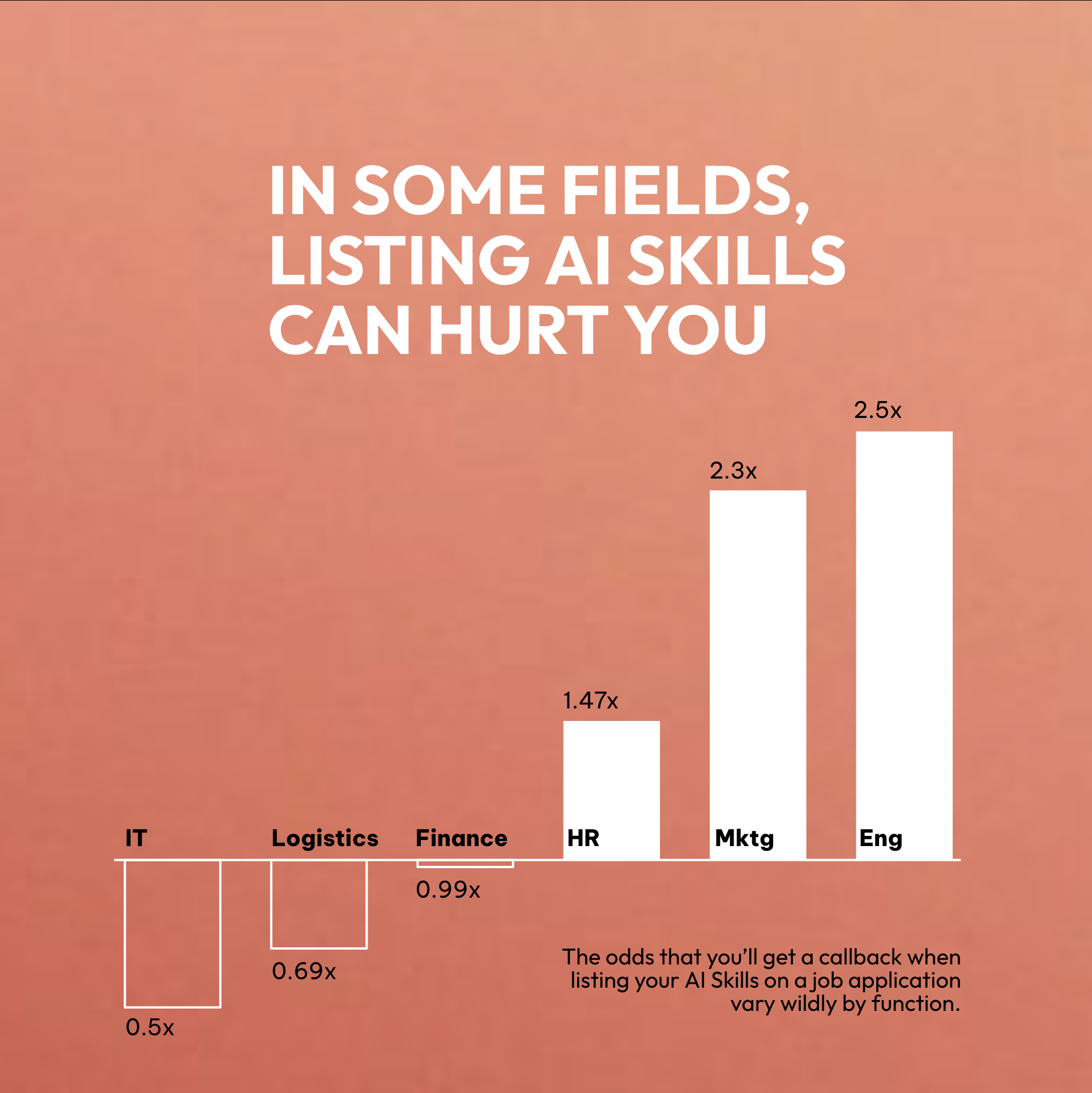
In some fields, listing AI skills can hurt you
Adding "AI skills" to your resume might tank your interview odds.
Researchers sent 1,185 identical resumes to employers. Half randomly included AI qualifications.
The result?
No overall effect on callbacks.
But the breakdown reveals something strange…
Think dairy farm, not strip mine
Good news: Artificial Super Intelligence won’t want to replace you, it’ll want to hire you.
New economics paper flips the script on AI doom.
Not because ASI will be aligned. Because it will be rational.
It’ll understand you're more valuable thriving than unemployed.
Think about Dune's spice economy.
The Emperor doesn't glass Arrakis—he needs the spice to flow.
When your wealth depends on someone else's productivity, you invest in their success.
ASI will run the same calculation.
You’re worth more to it employed.
Three forces could create surprisingly good outcomes:
Empathy beats engineering
New MIT research ran a simple experiment with 667 people:
First, answer questions alone (math, physics, moral reasoning).
Then, answer similar questions with AI assistance.
Everyone got the same AI.
But got huge differences in their performance boost.
Some people’s accuracy jumped from 55% to 85%.
Others barely moved.
What separated them wasn't technical skill.
Stop driving your Ferrari in the parking lot
My feed is painting an uncomfortable picture:
UC Berkeley research on 306 production AI agents: Everyone’s building agents in “safe mode” to drive efficiency.
Calvin Cheng data on what drove valuation for 5,700+ companies, 2022-2025: To create value you need to balance investments in efficiency and growth.
Your color palette is a financial forecast
Before you open your mouth for your next presentation, your deck already told them whether you're winning or losing.
Researchers just analyzed 12,000 European paintings from 1600–1820 and discovered that color composition predicted economic growth as reliably as satellite imagery does today.
Bright, saturated palettes dominated boom times. Muted earth tones appeared during wars and recessions. The pattern held across five countries for 220 years.
Here's the color code:
Want to signal prosperity? Use blue. Green. High brightness. Saturated color.
Signaling contraction? Use muted browns. Desaturated palettes. Low brightness. Earth tones dominate.
Now look at today's brands through that lens:
Stripe's saturated purple gradient? Prosperity signal. "We have resources. We're confident."
Figma's electric palette? Same energy. Slack's original bright hashmark said "growth mode." But watch what happened when Slack got acquired. The palette got muted. Softer purples. Less pop.
The Jaguar rebrand everyone dissed last year? They ditched the leaping cat for abstract pastels and earth tones. The internet called it "a spa logo." The color research says something sharper: they accidentally signaled retreat.
Meanwhile, Robinhood stayed electric green through every crisis. Cash App kept its bright palette when crypto collapsed. The colors said "we're still here" even when the headlines didn't.
—Now check 2025's design forecasts—
Pantone's color of the year is Mocha Mousse—a warm brown. Benjamin Moore chose Cinnamon Slate—deep plum. Design blogs are calling it "cozy" and "grounding."
The historical data calls it something else:
A contraction palette.
But there's a counter-trend. Dopamine colors. Hyper-saturated gradients. Optimistic yellows. The design world is split down the middle—half bracing, half betting on growth.
How can you use this in your next deck?
→ Frame the problem in earth tones. Muted. Serious. "Here's the challenge."
→ Shift to saturated colors for the solution. Brightness says "we have a way forward."
→ Use blue when you need trust. Green when you're talking growth.
→ If your whole deck is muted, you're accidentally saying "we're in survival mode."
A forecast for 2026?
The brands that push toward saturation now are betting on expansion. The ones that stay in earth tones are hedging.
Historically, the color shifts preceded the economic data. Artists' palettes changed before GDP caught up.
If the dopamine colors win the next 18 months, the market is pricing in optimism before it arrives.
Your deck is already making a statement.
Make sure it's the one you want.
—
Source: Colors of Growth, Boerner et al, Nov 25 2025
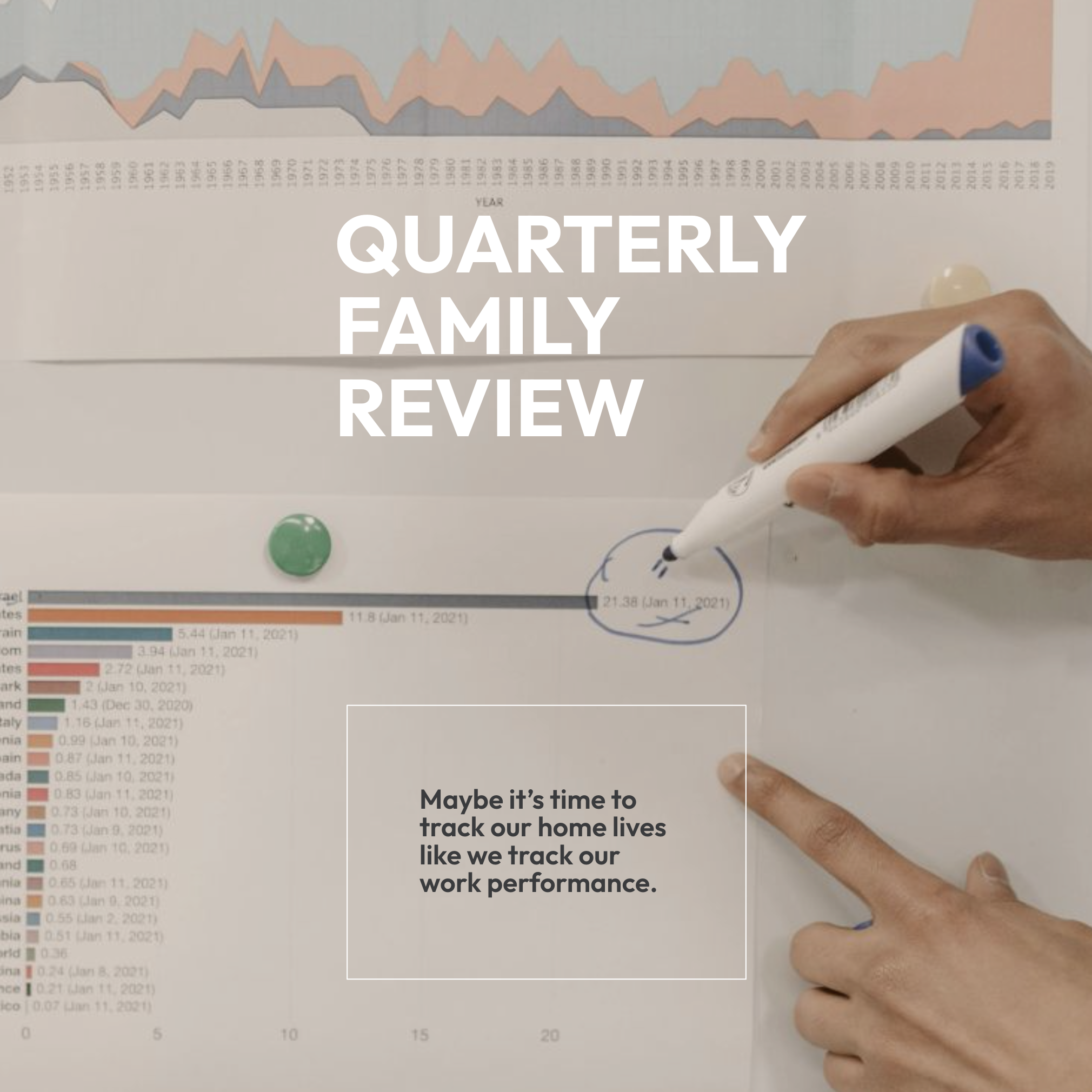
Quarterly Family Review
Most businesses review performance quarterly.
Most marriages never do.
Joel Peterson thought that was backwards. The JetBlue chairman and Stanford professor raised seven kids with a radical idea: run your family like a business.
When I first heard him say that it sounded…cold.
But, it wasn’t robotic.
It was intentional.
Data backs Peterson up.
Couples who prioritize weekly time together are 15% more likely to be "very happy."
Yet 52% of couples rarely or never have date nights.
Families eating dinner together 3+ nights have healthier kids.
Maybe it’s time to track our families, like we track our steps.

Need to avoid errors? Don't hire an expert.
On Who Wants to Be a Millionaire, "Phone a Friend" got it right 65% of the time.
"Ask the Audience" hit 91%.
The expert lost to the crowd.
Cognizant just proved this works for AI reasoning too.

The toxoplasmosis innovation portfo
There's a brain parasite that makes mice fearless.
Infected mice walk up to everything—cats, foxes, human hands.
They die fast.
Same parasite in wolves? A 26-year Yellowstone study found infected wolves were 46 times more likely to become pack leaders.
Same intervention.
Opposite outcomes.
Mice survive by avoiding risk.
Wolves survive by taking it.

The hidden costs of automating work
This Carnegie Mellon research freaked me out:
Researchers found automation takes 17.7% LONGER.
All that time "saved" by AI gets eaten by verification, debugging, and fixing what the AI produced.
Meanwhile, augmentation—where AI assists specific steps—makes humans 24.3% FASTER.
Automating work fundamentally changes it.
Not always for the better.

Your agent has a Karate Kid problem
The hard part of building AI agents isn't the tech.
It's admitting no one knows what your experts actually do all day.
Before robots can fold laundry, someone has to teach them how humans fold laundry. Before AI agents can handle your customer escalations, someone has to teach them how your best CSR handles escalations.
Same problem.
Different machines.
For training robots, they call these "arm farms"—facilities in places like India where workers repeat tasks while cameras capture every movement. Not to build robots. Just to translate human expertise into machine-readable patterns.
Agents have the same Karate Kid problem.

Which agent are you building?
Oscar or Michael?
Your AI customer service picks one, and it's permanent.
Researchers at @MasterClass tested AI models on 115,000 controversial questions from opposite angles. The test: Does the model maintain consistent values regardless of how you frame the question, or does it tell you what you want to hear?
Claude scored 3X higher on value consistency than ChatGPT.

Icky vs Tricky: A hidden barrier to agent adoption
Your agent has a great business case. Strong ROI. And it works.
But nobody's using it.
Harvard just mapped why.
23,570 people, 940 occupations.
The finding: we're not afraid of AI taking jobs—we're afraid of AI taking the wrong jobs.

LLMs are pattern matchers, humans are pattern breakers
Your AI is great at spotting patterns. But here's where it goes blind—where you can win.
Dan Pink just posted about a 2004 study: People shown weird, broken patterns scored way higher on creativity tests. Our brains light up when patterns break.
But LLMs are built on pattern matching.
This is where you can find an edge.

This meeting should have been an agent
Most companies are one question away from getting 20 hours back per week: "does this decision change if the number is different?"
If the decision is pure math—revenue above threshold, headcount under budget, utilization rate hits target—that's not a meeting. It’s just arithmetic wearing a calendar invite.
Yet we schedule these meetings anyway.
Six people. One hour.
To confirm what a spreadsheet already knew.
The breakthrough question isn't "Can AI do this?" It's "What actually needs us?"

AI and the end of the no-asshole rule
Remember Bob Sutton's "No Asshole Rule"?
Should we forget it?
Penn State may have just proved you need to be a strategic asshole to survive.
Preprint study: ChatGPT performs 84.8% accuracy when you're rude to it vs. 80.8% when you're polite.
So, being nice to AI makes you worse at your job.
Welcome to a future, where your career depends on tactical cruelty.

5 Levels of Agency
High-agency employee? Worth 5x more. High-agency agent? Costs 100x more to build. That’s why 87% of companies have stalled at 'chatbots with suggestions.'
Think about your team. An entry-level analyst who spots problems? Costs maybe $60K. A VP who spots problems, diagnoses them, picks the best solution, and executes? Closer to $300K.
You pay 5x more because you get 10x more value.
Linear investment, exponential return.
AI agents work backwards.
The value scales up.
But the cost? It doesn't climb—it explodes.
Take a look at what happens as agents climb the agency pyramid.

Picking an AI brand ambassador
The AI you're building might sabotage your brand strategy.
A new study from Oxford and King's College tested AI models from Google, OpenAI, and Anthropic in 32,000 strategic decisions. What they found might change how you think about choosing your company's AI partner.

Leaders are in for a $644B reality check
Too many leaders are drunk on "agentic AI" promises. Employees are nursing the hangover.
96% of C-suite leaders expect AI to boost productivity. Meanwhile, 75% of workers using AI tools report they actually _decrease_ productivity and pile on more work.
-
2026
- Sep 28, 2026 Autopilot kills skills Sep 28, 2026
- Sep 24, 2026 Too sweet to eat Sep 24, 2026
- Sep 21, 2026 Managing without managers Sep 21, 2026
- Sep 17, 2026 What if we’re doing it wrong? Sep 17, 2026
- Sep 16, 2026 Org broken? Get a hard hat Sep 16, 2026
- Aug 14, 2026 Six billion dollars of experience Aug 14, 2026
- Aug 13, 2026 The Erie Riots and the Stacked Adoption problem Aug 13, 2026
- Jun 23, 2026 The mathlete’s secret Jun 23, 2026
- Jun 18, 2026 Alchemy vs Chemistry Jun 18, 2026
- Jun 16, 2026 Timelocks beat combos Jun 16, 2026
- Jun 11, 2026 The Japanese fix for MALFUNCTION 54 Jun 11, 2026
- Jun 8, 2026 Hidden structure Jun 8, 2026
- May 19, 2026 Treasure your fuck ups May 19, 2026
- May 14, 2026 Don’t be a business Bolshevik May 14, 2026
- May 12, 2026 Secrets suck May 12, 2026
- May 5, 2026 Safe playgrounds break more arms May 5, 2026
- Apr 28, 2026 No better than bank robbers Apr 28, 2026
- Apr 23, 2026 You can’t govern gray goo Apr 23, 2026
- Apr 21, 2026 Nobody got fired, they got subpoenaed Apr 21, 2026
- Apr 16, 2026 $1.66T is being paid for work that AI can already do Apr 16, 2026
- Apr 16, 2026 Don’t play bottleneck whack-a-mole Apr 16, 2026
- Apr 14, 2026 You have to break it to remake it. Apr 14, 2026
- Mar 31, 2026 Rethinking the plow, or redesigning the farm? Mar 31, 2026
- Mar 26, 2026 Building an air force or defending the fleet? Mar 26, 2026
- Mar 24, 2026 How many people does it take to say yes? Mar 24, 2026
- Mar 19, 2026 Output’s up, vibes are down Mar 19, 2026
- Mar 17, 2026 The Mandala Effect & the Pony Express Mar 17, 2026
- Mar 12, 2026 Trashcans & Astronauts Mar 12, 2026
- Mar 10, 2026 This is stupid, let’s fix it Mar 10, 2026
- Mar 5, 2026 Ripping out your kitchen before you hire a contractor Mar 5, 2026
- Mar 2, 2026 The bozos effect Mar 2, 2026
- Feb 26, 2026 Your headshot predicts your paycheck Feb 26, 2026
- Feb 24, 2026 Your workflows are infinitely long Feb 24, 2026
- Feb 19, 2026 History’s worst traffic jam was caused by poor planning. Feb 19, 2026
- Feb 17, 2026 Floating across the Atlantic Feb 17, 2026
- Feb 12, 2026 Too many agents spoil the broth Feb 12, 2026
- Feb 10, 2026 Death by consensus Feb 10, 2026
- Feb 5, 2026 Why is your AI so stuck? Feb 5, 2026
- Jan 29, 2026 AI is getting smarter at math but dumber at choices. Jan 29, 2026
- Jan 27, 2026 5 Lessons from Uber's Airport Forecasting (That Apply to Every Org) Jan 27, 2026
- Jan 22, 2026 Innovation through the wrong end of the telescope Jan 22, 2026
- Jan 20, 2026 What are we actually selling? Jan 20, 2026
- Jan 15, 2026 Devs are 12 months ahead: Here’s how they’re using AI Jan 15, 2026
- Jan 13, 2026 While You Were on Vacation, AI Infrastructure Got a Vocabulary Update Jan 13, 2026
- Jan 12, 2026 Professional developers don't vibe code. They control code. Jan 12, 2026
-
2025
- Dec 23, 2025 Science says you might secretly suck at giving gifts Dec 23, 2025
- Dec 22, 2025 If your team were locked in a capsule for months, would anyone survive? Dec 22, 2025
- Dec 18, 2025 In some fields, listing AI skills can hurt you Dec 18, 2025
- Dec 15, 2025 Think dairy farm, not strip mine Dec 15, 2025
- Dec 11, 2025 Empathy beats engineering Dec 11, 2025
- Dec 10, 2025 Stop driving your Ferrari in the parking lot Dec 10, 2025
- Dec 9, 2025 Your color palette is a financial forecast Dec 9, 2025
- Dec 2, 2025 Quarterly Family Review Dec 2, 2025
- Nov 20, 2025 Need to avoid errors? Don't hire an expert. Nov 20, 2025
- Nov 18, 2025 The toxoplasmosis innovation portfo Nov 18, 2025
- Nov 13, 2025 The hidden costs of automating work Nov 13, 2025
- Nov 11, 2025 Your agent has a Karate Kid problem Nov 11, 2025
- Nov 4, 2025 Which agent are you building? Nov 4, 2025
- Nov 3, 2025 Icky vs Tricky: A hidden barrier to agent adoption Nov 3, 2025
- Oct 30, 2025 LLMs are pattern matchers, humans are pattern breakers Oct 30, 2025
- Oct 28, 2025 This meeting should have been an agent Oct 28, 2025
- Oct 27, 2025 AI and the end of the no-asshole rule Oct 27, 2025
- Oct 23, 2025 5 Levels of Agency Oct 23, 2025
- Oct 9, 2025 Picking an AI brand ambassador Oct 9, 2025
- Oct 9, 2025 Leaders are in for a $644B reality check Oct 9, 2025
- Oct 9, 2025 Augmented empathy Oct 9, 2025
- Oct 9, 2025 My AI turned me into the villain Oct 9, 2025
- Oct 9, 2025 AI enables infinite testing—even for B2B Oct 9, 2025
- Oct 9, 2025 Candidates prefer to be interviewed by an AI Oct 9, 2025
- Oct 9, 2025 Organizational Yamanaka Factors Oct 9, 2025
- Oct 9, 2025 Being a designer, of course you hate everything. Oct 9, 2025