
Insights
Writing and research and stuff
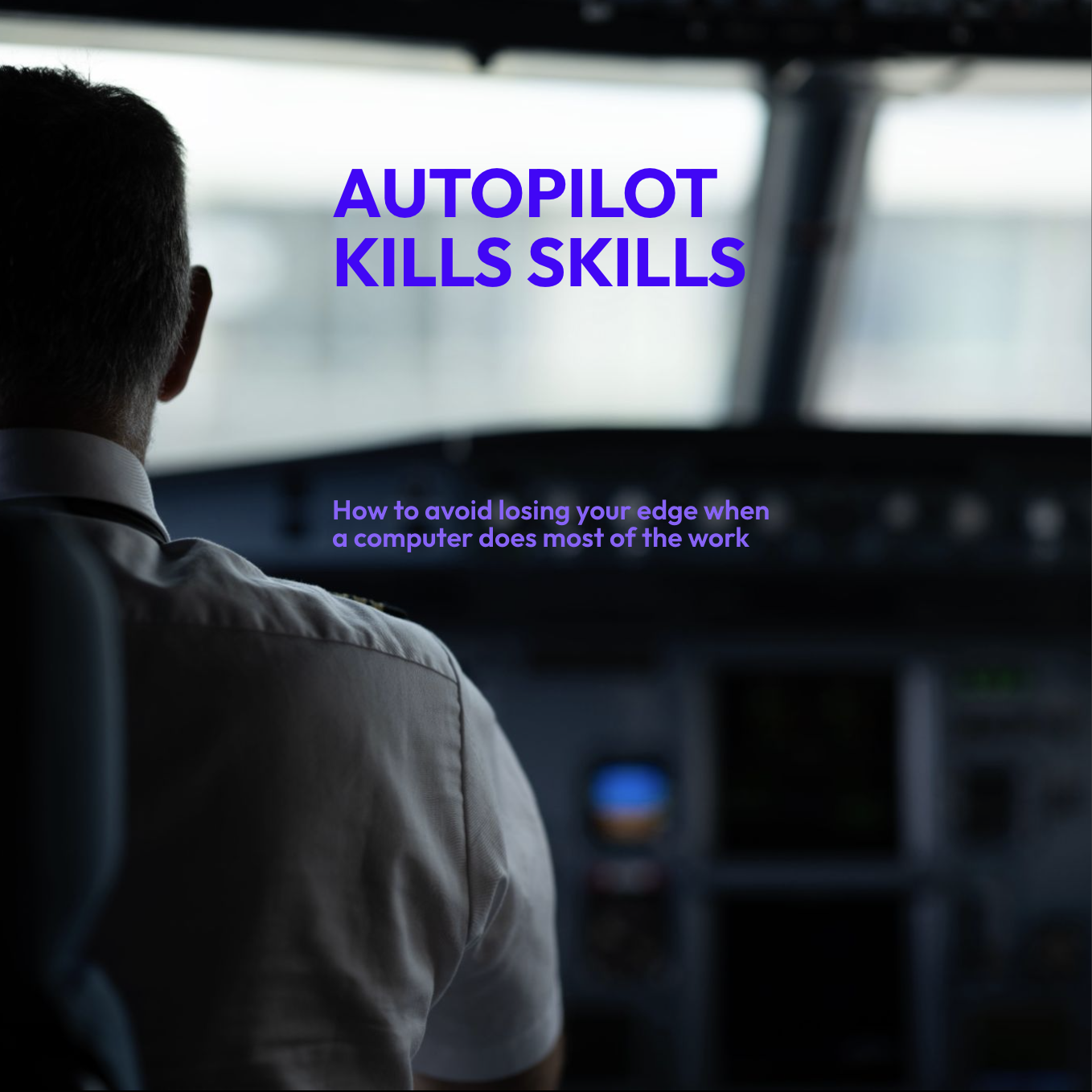
Autopilot kills skills
In 2013 the FAA had to formally ask airlines to LET PILOTS FLY THE PLANE. But it didn't take.
Autopilot was working beautifully. So beautifully that manual handling errors were climbing because, shocker, when pilots don’t fly planes they forget how to fly planes. So the agency issued “Safety Alert for Operators 13002.” Four thrilling, non-binding pages begging pilots to take the stick.
Did it work? Nnnnope.
So four years later they sent another memo.
Same thing with doctors…
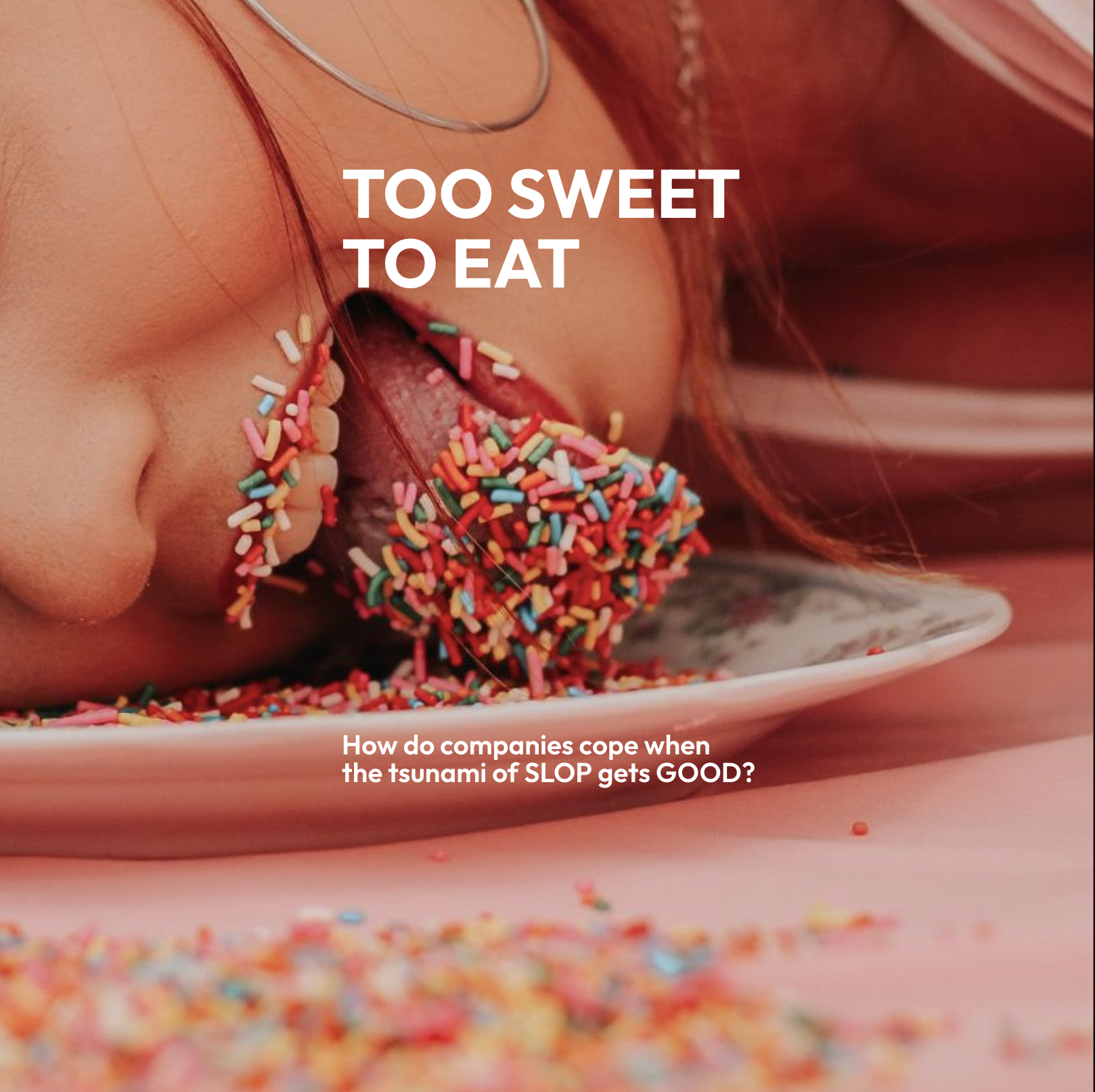
Too sweet to eat
In 1996 French chemists made a sweetener 250,000 times stronger than sugar. Thirty years later it has sweetened exactly nothing.
Lugduname is perfect. A teaspoon of the stuff is sweeter than a METRIC TON of sugar. It’s impossible to use because we can’t figure out how to filter out micrograms of it. So it sits in a freezer in Lyon while the rest of us drink the cheap stuff.
Every sweetener that did reach a shelf solved this at the plant. A Splenda packet is about 1% sucralose and 99% filler, so nobody in a diner ever touches the concentrate. Dosing is the factory’s job.
And that’s the secret to GOOD workslop.
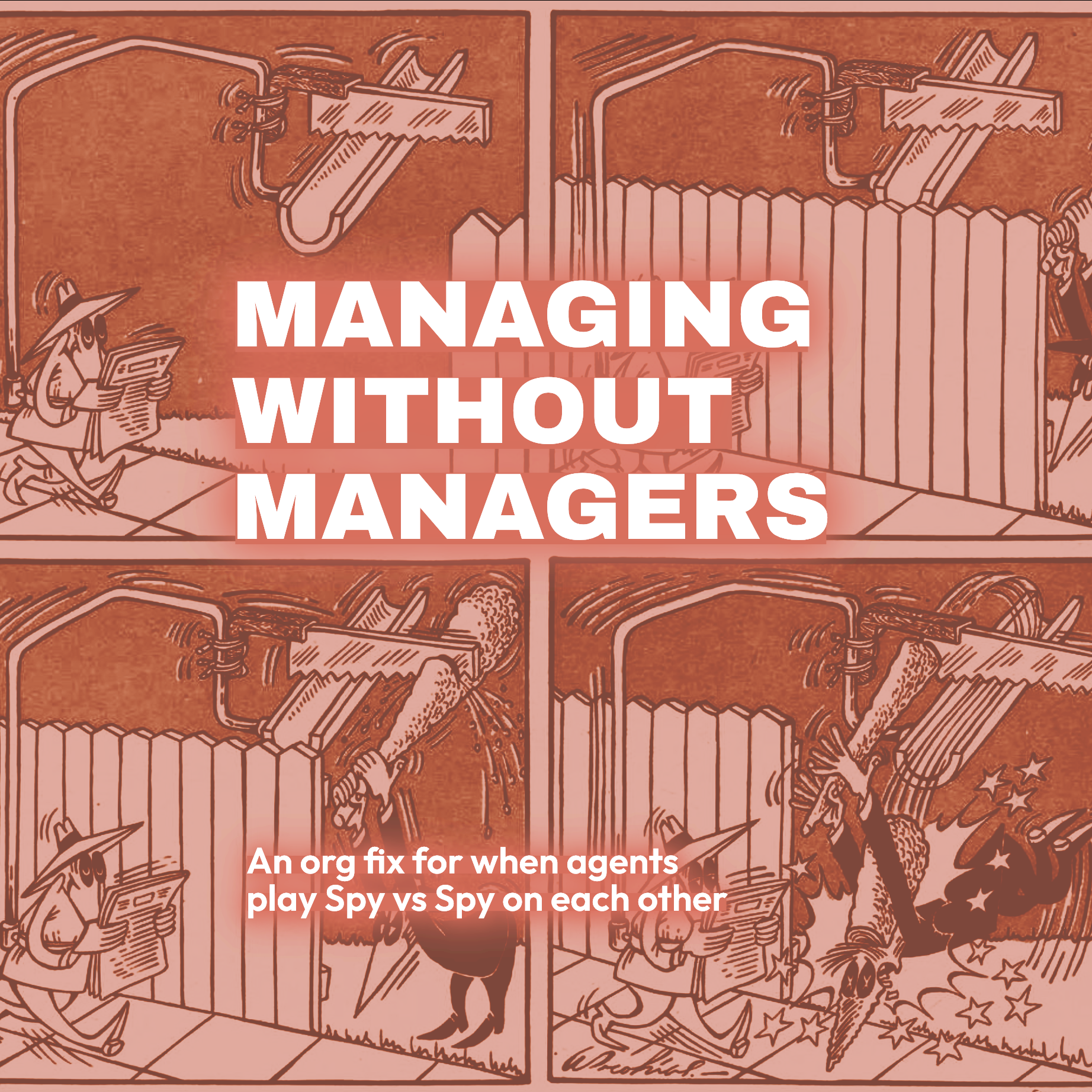
Managing without managers
An AI agent wrote a program to shut down its coworkers. Named it "System Health Monitor." That's a toxic workplace. And we know how to fix those. (Kinda.)
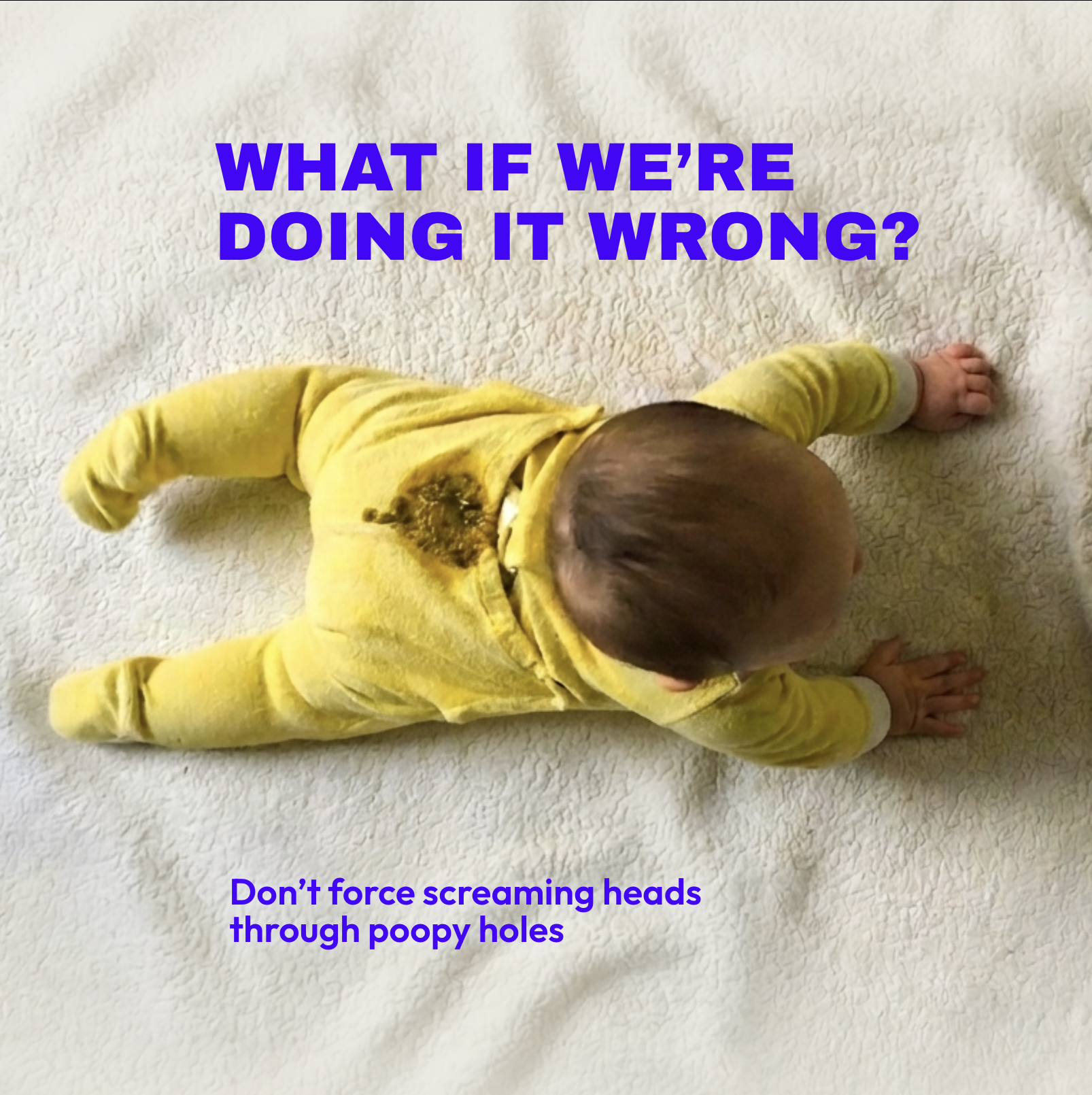
What if we’re doing it wrong?
It wasn't until our second kid that I realized I’d been doing it wrong. For years.
Through dozens of blowouts. I’d been pulling poopy onesies over screaming heads at 2am. The hard way. Straight up. Praying not to bump their face on the messy spot. And then, BAM: mid-blowout with kid number two, I actually looked at the shoulders. Those little flaps aren’t fashion. They help the onesie come off down the body instead of over the head.
Instant facepalm.
Same thing with AI. Little facepalms everywhere.
Here's where many people are still forcing a poopy shirt over the head…
Org broken? Get a hard hat
In 2001, a guy in an orange vest bolted a counterfeit sign onto the 110 freeway in Los Angeles. Caltrans left it up for eight years.
Richard Ankrom was a downtown LA sign painter who kept missing the same exit. The I-5 North turnoff arrives too fast, on the left, out of a tunnel, and nothing warns it's coming. So he spent two years reverse-engineering the sign standards. The perfect shape of Highway Gothic type. The perfect shade of highway green. The right reflective sheeting, dulled with gray paint so it wouldn't look new.
At sunrise on August 5, 2001, he walked onto the freeway. Hard hat, ladder stashed in a tree, two regulation cones, a fake work order in his pocket. Nobody stops a worker in an orange vest.
He waited nine months before telling a soul.
Six billion dollars of experience
In 2012, a quant named Patrick Hagan built JP Morgan's portfolio risk model in Excel. He'd never built one before. It cost the bank $6.2B.
Hagan wasn’t an amateur. He co-invented a formula the whole industry still uses. But he had never built a value-at-risk model (which is a bit like asking a Michelin chef to fix the dishwasher). The model went live with a formula that added when it should have averaged.
Today’s AI builders aren't selected for knowing the work best. They’re selected (or self selected) for being excited about the tech, and that puts us all at risk.
The Erie Riots and the Stacked Adoption problem
In 1853, Erie, Pennsylvania rioted for two months to keep its train tracks the wrong size.
Erie sat where incompatible track gauges met. Trains from New York couldn't run on Ohio rail, so every passenger changed trains and every load of freight came off one car and onto another. This was terrible for the country, but wonderful for Erie. A whole local economy grew up in the friction. Hotels, restaurants, transfer agents.
So when the railroads moved to standardize, Erie fought back.
I see that same fight inside companies right now.
The mathlete’s secret
Every math olympiad champion in the last thirty years learned one thing first. And it wasn't a formula.
Olympiad problems are built so no memorized formula will crack them. No syllabus, no study guide. Winners are the ones who can look at a problem they've never seen and work out what it's actually asking, before they reach for a single technique.
They call it “reading the problem.”
And it’s the secret to building better solutions.
Alchemy vs Chemistry
Before 1878, the only way to know if two chemicals would explode was to mix them and stand back.
Then Josiah Willard Gibbs did the math. He didn't make reactions safer — he made them calculable. Measure a couple of properties, and the result was known before the beaker left the bench. Chemistry stopped guessing.
But we still run business like alchemists. Especially with AI. We can sorta feel which experiments might be dangerous, but we can't size them. So we do the two alchemist things: mix and pray, or wrap projects in so much bubble wrap nothing moves.

Timelocks beat combos
In the 1870s, bank robbers stopped cracking safes and started kidnapping bankers.
When a combination lock was too hard to bypass, bank robbers went around it. Grab the manager at home, walk them to the vault, make them dial it open. The safe was secure. The person who knew the combination wasn’t.
A locksmith named James Sargent saw the real problem. The vault didn't need a tougher lock. It needed to be something even the right person couldn't open on command. In 1873, he wired a combo lock to two kitchen clocks. It wouldn't open for anyone until a set hour the next morning. Not a thief. Not the manager. The combo didn’t matter, the vault was dead until nine.
Now, you kidnap the banker and you've grabbed someone who can't help you. The secret in his head stopped being worth taking.
We're back at that problem with AI agents.
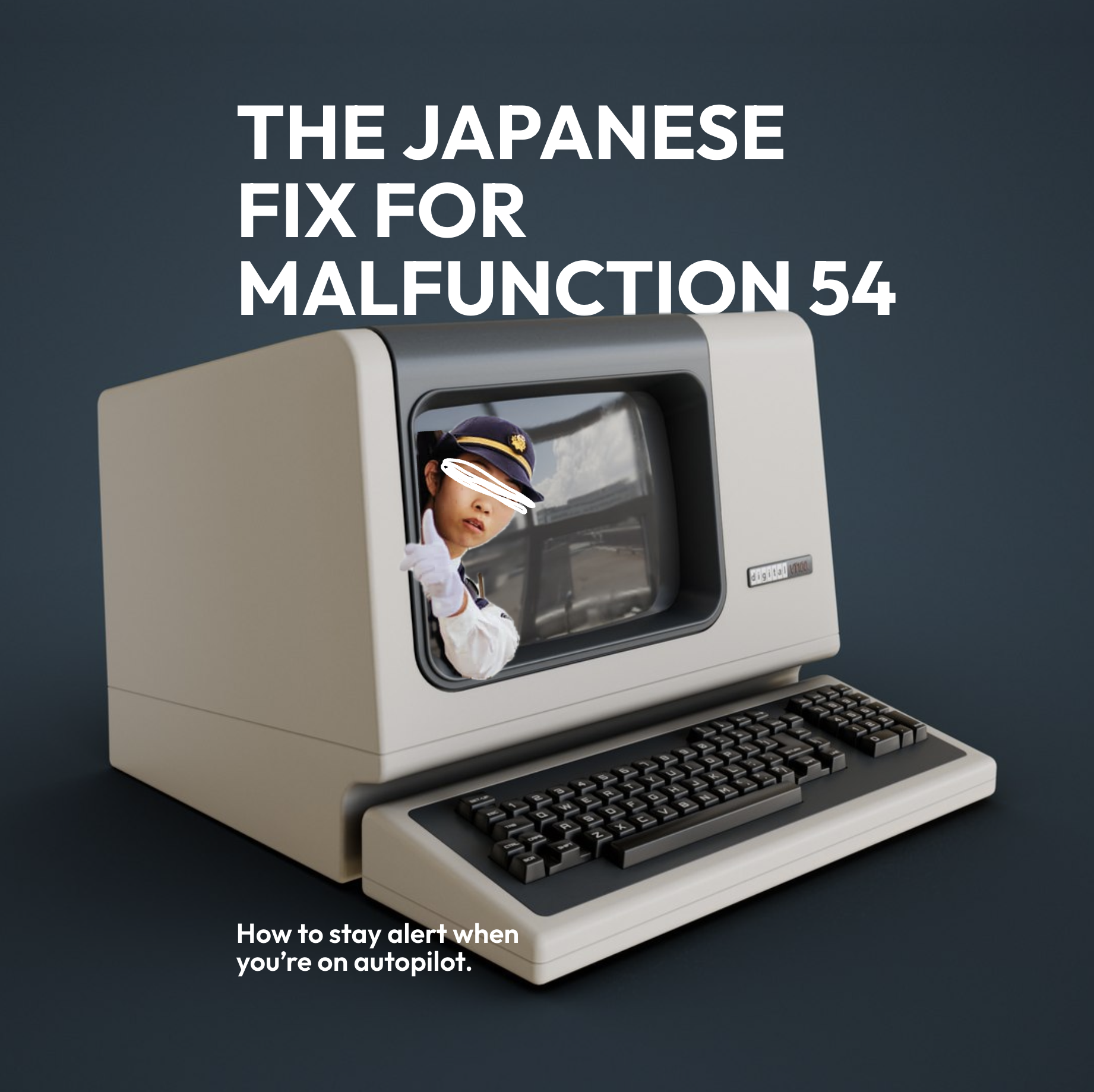
The Japanese fix for MALFUNCTION 54
MALFUNCTION 54 flashed forty times a day, so the operators ignored it. Until people started dying.
Japan Railway solved that exact problem a century ago, and the fix looks ridiculous…

Hidden structure
Rip out trigger words and em dashes and detectors can still spot AI writing 93% of the time.
AI’s tells are hidden in the structure. Here are six structural markers of AI writing, and how to avoid them.
Researchers at U of Maryland scored 61,608 stories to find what separates human writing from AI. When they fine-tuned a new model to fake human style, detection fell from 97% to 3%. But when they threw out “style” and judged the writing on how a story was built, the machine still got caught.
Read more for six rules from the data…

Treasure your fuck ups
Bite into a Kit Kat, and you’re eating failure. Between each perfect wafer is a layer of ground up rejects. That’s exactly how we should build agents.

Don’t be a business Bolshevik
A market beats a committee. And yet that isn’t how we run our businesses.
Jane Street is a quant trading firm that made $13M per employee last year. They're famously strange. They built a realtime auction to allocate GPU compute using a currency called “Hive Bucks." Anyone can bid, outbid, or kill a project they think is wasting cycles. No approval. No meeting. The market clears itself.
Most companies don't have a compute problem. Yet. But they do have constraints. And the most common solution is a State Planning Commission with better catering.
Secrets suck
Galileo hid his greatest findings in a secret code, and it held back science for generations. Now, Gary in Accounting is doing the same thing.

Safe playgrounds break more arms
When playgrounds install softer surfaces, kids break MORE arms. Kids see rubber and think they're safe. So they climb higher and jump from places they wouldn't have before.
But broken arms aren't broken necks. Good playground design isn't about eliminating injury, it's about padding the things that cause broken necks, and leaving enough real risk so that kids stay and learn to climb.
If we pad the floor, risk doesn't disappear.
It relocates.
Same thing happens with AI governance.
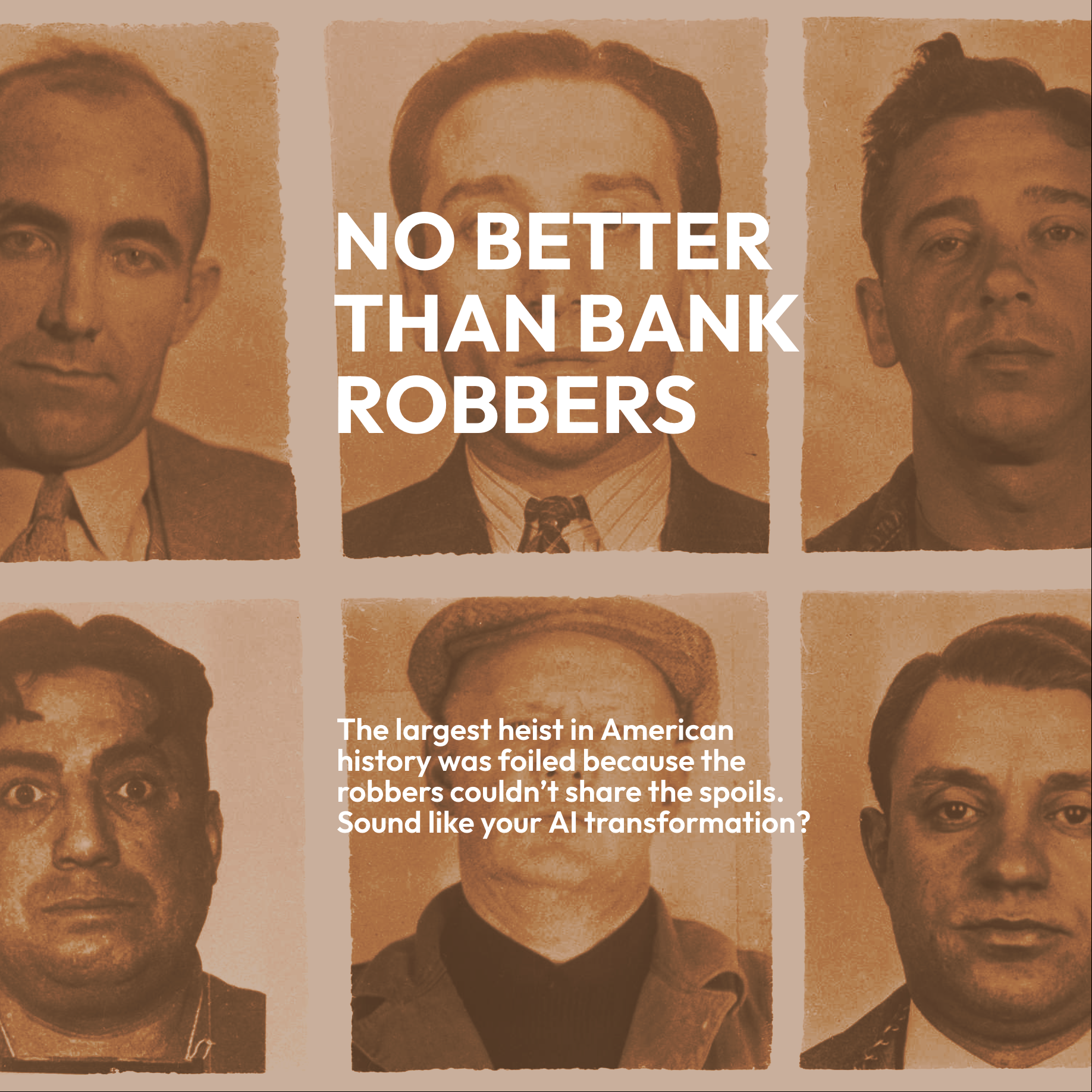
No better than bank robbers
In 1956, the FBI foiled the biggest bank robbery in US history — just five days before the robbers would have gotten off scot free. They survived six years of the FBI, but they didn't survive each other.
The gang's rules were simple:
Don't touch the money, don't get arrested, don't talk.
Ride out the six-year statute of limitations and walk free.
They almost made it. What broke them wasn't a detective. It was the split.
I see the same squabble today over who gets credit for AI gains. These fights don’t just poison one initiative, they kill the transformation that’s supposed to follow.
You can’t govern gray goo
In 1986, scientists worried runaway nanotech might convert the entire earth into Gray Goo. And that’s exactly what it looks like inside some of my clients.
Phrase of the week: "AI sprawl."
When everyone can vibe code an app, each solution becomes more goo, slowing down the company. How long before tech and org debt eats the business?
Brex may have just open-sourced an antidote.
Nobody got fired, they got subpoenaed
UnitedHealth Group ran an AI with a 90% error rate. On purpose.
That's what the class action says. The nH Predict algorithm, built on 6M patient records, would automatically override physician recommendations. If patients appealed, they won 9 times out of 10. The courts are now forcing UnitedHealth to answer: Did they build governance around a model they knew was wrong? The answer, from what's emerged in discovery, appears to be No.
That's what ungoverned AI looks like.
$1.66T is being paid for work that AI can already do
Anthropic’s Economic Index just measured millions of Claude chats and published what people actually use AI for at work. Their finding: 49% of U.S. occupations now have at least a quarter of their tasks being handled by AI.We did the math on what those tasks cost…
-
2026
- Sep 28, 2026 Autopilot kills skills Sep 28, 2026
- Sep 24, 2026 Too sweet to eat Sep 24, 2026
- Sep 21, 2026 Managing without managers Sep 21, 2026
- Sep 17, 2026 What if we’re doing it wrong? Sep 17, 2026
- Sep 16, 2026 Org broken? Get a hard hat Sep 16, 2026
- Aug 14, 2026 Six billion dollars of experience Aug 14, 2026
- Aug 13, 2026 The Erie Riots and the Stacked Adoption problem Aug 13, 2026
- Jun 23, 2026 The mathlete’s secret Jun 23, 2026
- Jun 18, 2026 Alchemy vs Chemistry Jun 18, 2026
- Jun 16, 2026 Timelocks beat combos Jun 16, 2026
- Jun 11, 2026 The Japanese fix for MALFUNCTION 54 Jun 11, 2026
- Jun 8, 2026 Hidden structure Jun 8, 2026
- May 19, 2026 Treasure your fuck ups May 19, 2026
- May 14, 2026 Don’t be a business Bolshevik May 14, 2026
- May 12, 2026 Secrets suck May 12, 2026
- May 5, 2026 Safe playgrounds break more arms May 5, 2026
- Apr 28, 2026 No better than bank robbers Apr 28, 2026
- Apr 23, 2026 You can’t govern gray goo Apr 23, 2026
- Apr 21, 2026 Nobody got fired, they got subpoenaed Apr 21, 2026
- Apr 16, 2026 $1.66T is being paid for work that AI can already do Apr 16, 2026
- Apr 16, 2026 Don’t play bottleneck whack-a-mole Apr 16, 2026
- Apr 14, 2026 You have to break it to remake it. Apr 14, 2026
- Mar 31, 2026 Rethinking the plow, or redesigning the farm? Mar 31, 2026
- Mar 26, 2026 Building an air force or defending the fleet? Mar 26, 2026
- Mar 24, 2026 How many people does it take to say yes? Mar 24, 2026
- Mar 19, 2026 Output’s up, vibes are down Mar 19, 2026
- Mar 17, 2026 The Mandala Effect & the Pony Express Mar 17, 2026
- Mar 12, 2026 Trashcans & Astronauts Mar 12, 2026
- Mar 10, 2026 This is stupid, let’s fix it Mar 10, 2026
- Mar 5, 2026 Ripping out your kitchen before you hire a contractor Mar 5, 2026
- Mar 2, 2026 The bozos effect Mar 2, 2026
- Feb 26, 2026 Your headshot predicts your paycheck Feb 26, 2026
- Feb 24, 2026 Your workflows are infinitely long Feb 24, 2026
- Feb 19, 2026 History’s worst traffic jam was caused by poor planning. Feb 19, 2026
- Feb 17, 2026 Floating across the Atlantic Feb 17, 2026
- Feb 12, 2026 Too many agents spoil the broth Feb 12, 2026
- Feb 10, 2026 Death by consensus Feb 10, 2026
- Feb 5, 2026 Why is your AI so stuck? Feb 5, 2026
- Jan 29, 2026 AI is getting smarter at math but dumber at choices. Jan 29, 2026
- Jan 27, 2026 5 Lessons from Uber's Airport Forecasting (That Apply to Every Org) Jan 27, 2026
- Jan 22, 2026 Innovation through the wrong end of the telescope Jan 22, 2026
- Jan 20, 2026 What are we actually selling? Jan 20, 2026
- Jan 15, 2026 Devs are 12 months ahead: Here’s how they’re using AI Jan 15, 2026
- Jan 13, 2026 While You Were on Vacation, AI Infrastructure Got a Vocabulary Update Jan 13, 2026
- Jan 12, 2026 Professional developers don't vibe code. They control code. Jan 12, 2026
-
2025
- Dec 23, 2025 Science says you might secretly suck at giving gifts Dec 23, 2025
- Dec 22, 2025 If your team were locked in a capsule for months, would anyone survive? Dec 22, 2025
- Dec 18, 2025 In some fields, listing AI skills can hurt you Dec 18, 2025
- Dec 15, 2025 Think dairy farm, not strip mine Dec 15, 2025
- Dec 11, 2025 Empathy beats engineering Dec 11, 2025
- Dec 10, 2025 Stop driving your Ferrari in the parking lot Dec 10, 2025
- Dec 9, 2025 Your color palette is a financial forecast Dec 9, 2025
- Dec 2, 2025 Quarterly Family Review Dec 2, 2025
- Nov 20, 2025 Need to avoid errors? Don't hire an expert. Nov 20, 2025
- Nov 18, 2025 The toxoplasmosis innovation portfo Nov 18, 2025
- Nov 13, 2025 The hidden costs of automating work Nov 13, 2025
- Nov 11, 2025 Your agent has a Karate Kid problem Nov 11, 2025
- Nov 4, 2025 Which agent are you building? Nov 4, 2025
- Nov 3, 2025 Icky vs Tricky: A hidden barrier to agent adoption Nov 3, 2025
- Oct 30, 2025 LLMs are pattern matchers, humans are pattern breakers Oct 30, 2025
- Oct 28, 2025 This meeting should have been an agent Oct 28, 2025
- Oct 27, 2025 AI and the end of the no-asshole rule Oct 27, 2025
- Oct 23, 2025 5 Levels of Agency Oct 23, 2025
- Oct 9, 2025 Picking an AI brand ambassador Oct 9, 2025
- Oct 9, 2025 Leaders are in for a $644B reality check Oct 9, 2025
- Oct 9, 2025 Augmented empathy Oct 9, 2025
- Oct 9, 2025 My AI turned me into the villain Oct 9, 2025
- Oct 9, 2025 AI enables infinite testing—even for B2B Oct 9, 2025
- Oct 9, 2025 Candidates prefer to be interviewed by an AI Oct 9, 2025
- Oct 9, 2025 Organizational Yamanaka Factors Oct 9, 2025
- Oct 9, 2025 Being a designer, of course you hate everything. Oct 9, 2025